
Raccoons are one of the most common attic intruders in Hamilton. They are intelligent, strong, and highly adaptable to urban environments. While they may seem harmless from a distance, raccoons nesting in your attic can cause serious structural damage, contaminate insulation, and create health risks for your family.
If you suspect wildlife activity in your home, recognizing the early warning signs can save you thousands in repairs. This guide outlines the most common signs you have raccoons in your attic, why raccoons choose Hamilton homes, and what steps you should take next.
Why Raccoons Target Attics in Hamilton
Hamilton offers raccoons everything they need: mature trees, accessible rooftops, steady food sources, and safe shelter. Attics are especially attractive because they are warm, dry, and protected from predators.
Raccoon activity increases during:
Late winter and early spring (breeding season)
Fall (seeking insulated shelter before winter)
Cold snaps (searching for warmth)
Female raccoons frequently choose attics to give birth and raise their young. Once inside, they often remain for several weeks or even months.
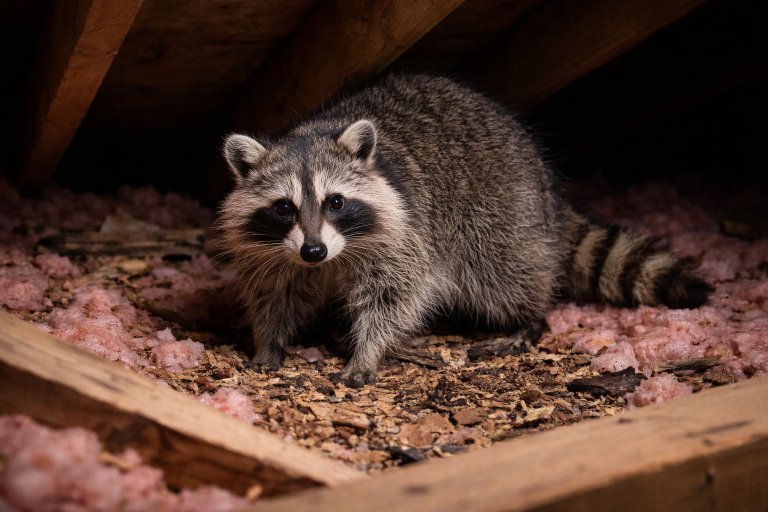
Loud Thumping or Heavy Footsteps at Night
One of the most obvious signs of raccoons in the attic is noise. Unlike mice or squirrels, raccoons are heavy animals. Their movements sound like:
Slow, heavy footsteps
Thumping or dragging noises
Rolling or shifting sounds
Occasional vocalizations such as chattering or growling
Raccoons are nocturnal, so these noises are usually most noticeable at night. If the sounds are loud enough to wake you up, it is unlikely to be a small rodent.
Scratching and Tearing Sounds in Ceilings
In addition to footsteps, raccoons often scratch and tear materials inside the attic. You may hear:
Persistent scratching
Ripping or shredding sounds
Movement across rafters
These sounds usually occur as raccoons create nesting areas by pulling apart insulation. If you notice scratching combined with heavy movement, the problem is likely more than just mice.
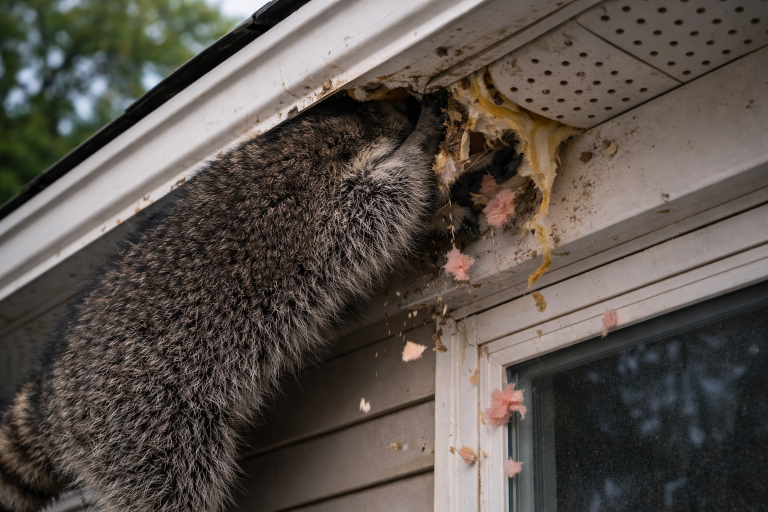
Visible Roof or Soffit Damage
Raccoons do not simply slip into tiny cracks. They often create their own entry points.
Common exterior signs include:
Torn roof vents
Loose or bent soffits
Shingles pulled back
Damaged fascia boards
Chimney caps displaced
Many homeowners first discover a raccoon issue after noticing roof damage from the ground. Even a small opening can allow a raccoon to enter. Once they find a weak spot, they will widen it.
Insulation Pulled Apart in the Attic
If you inspect your attic and see insulation flattened, scattered, or piled up, raccoons may be present.
Raccoons create nesting areas by:
Shredding fiberglass insulation
Compressing materials into a den
Moving debris into corners
Damaged insulation reduces your home’s energy efficiency. It can also increase heating and cooling costs. In severe cases, insulation becomes contaminated and must be replaced entirely.
Strong Odours Coming from the Attic
Raccoons leave behind droppings and urine. Over time, this creates a strong, unpleasant odour.
Signs of contamination include:
Musty or ammonia-like smells
Stains on ceilings
Odour intensifying during warm weather
Raccoon droppings may carry parasites and bacteria. Prolonged exposure can pose health concerns. If you notice persistent attic odours combined with noise, professional inspection is recommended.
Baby Raccoon Noises in Spring
During spring, female raccoons give birth in attic spaces. Baby raccoons make distinct high-pitched chirping or squeaking sounds.
If you hear:
Soft crying noises
Chattering sounds
Increased activity during the day
There may be a mother and her young inside your attic. Removing raccoons during baby season requires specialized techniques to avoid separating the mother from her offspring.
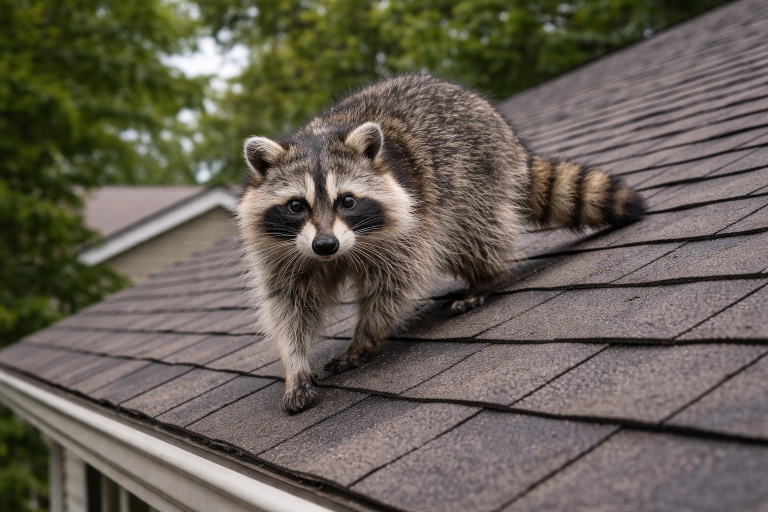
Raccoon Sightings on Your Roof
If you regularly see raccoons on your roofline, chimney, or deck, your home may already be a target.
Frequent roof sightings suggest:
They have identified a potential entry point
They are actively entering and exiting
A den site may already be established
Raccoons are creatures of habit. Once they find a safe shelter, they often return.
Damaged Garbage and Increased Yard Activity
While not attic-specific, increased raccoon activity around your property often precedes roof entry.
Watch for:
Knocked-over garbage bins
Claw marks on siding
Soil disturbed near the foundation
Tracks in snow
If raccoons are regularly visiting your yard, inspecting your roofline is a smart next step.
Why Ignoring Raccoon Signs Can Be Costly
Many homeowners delay action, hoping the noise will stop on its own. Unfortunately, raccoons rarely leave voluntarily.
The longer raccoons remain inside your attic, the more damage they cause. This can include:
Structural wood damage
Mold from contaminated insulation
Electrical fire risks from chewed wiring
Interior ceiling damage
Early removal minimizes repair costs and prevents larger infestations.
The Risks of DIY Raccoon Removal
Attempting to remove raccoons without professional training can create serious problems.
Common DIY mistakes include:
Sealing entry points while raccoons are still inside
Separating mothers and babies
Using traps improperly
Ignoring secondary entry holes
Ontario wildlife regulations require humane removal methods. Improper handling can lead to fines or additional damage. Raccoons are strong and can become defensive if cornered.
How Professional Raccoon Removal Works
Professional raccoon removal focuses on both removal and prevention. The process typically includes:
Inspection
A technician examines your roofline, attic, and surrounding areas to identify entry points and assess damage.
Humane Removal
One-way doors are installed to allow raccoons to exit safely without re-entry. If babies are present, specialized care is taken to reunite them with the mother outside.
Exclusion
All vulnerable areas are reinforced using durable materials to prevent future intrusion.
Cleanup
Contaminated insulation and droppings are removed when necessary to restore attic health.
When to Call for an Inspection
If you experience any combination of the signs listed above, it is time to schedule a professional inspection.
Do not wait until:
Ceiling stains appear
Odors become overwhelming
Structural damage worsens
Prompt action protects your home and your family’s health.
Book Professional Raccoon Removal with Hamilton Wildlife
If you suspect raccoons in your attic, professional help ensures safe, humane, and permanent removal. Hamilton Wildlife specializes in raccoon removal and long-term exclusion throughout Hamilton. Our team understands local wildlife behaviour and provides solutions designed to prevent future problems.
Do not ignore the warning signs. Protect your attic, insulation, and roofline before minor activity becomes major damage. Contact Hamilton Wildlife today to book your raccoon inspection and secure your home from unwanted wildlife.