
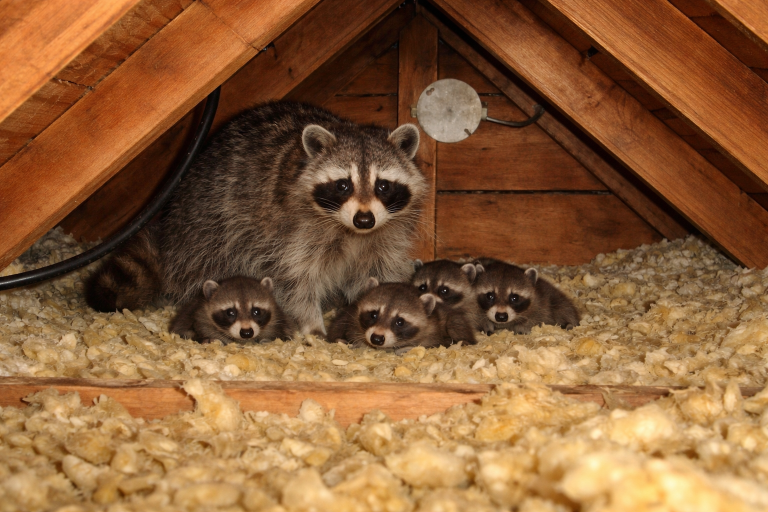
Spring in Hamilton brings warmer weather, longer days, and unfortunately, baby raccoon season. If you are hearing chirping, scratching, or heavy movement above your ceiling, there is a strong chance a mother raccoon has chosen your attic as a nesting site.
Discovering baby raccoons in the attic can be stressful. Many homeowners are unsure whether to wait, intervene, or attempt removal themselves. Acting the wrong way can make the situation worse, causing damage to your home and unnecessary harm to the animals.
This guide explains what to do if you suspect baby raccoons in your attic, what to avoid, and how professional raccoon removal protects both your property and the wildlife involved.
Why Mother Raccoons Choose Attics
Attics provide everything a mother raccoon needs to safely raise her young. They are warm, quiet, dry, and protected from predators. In Hamilton neighborhoods with mature trees and accessible rooflines, attics are especially attractive during the spring birthing season.
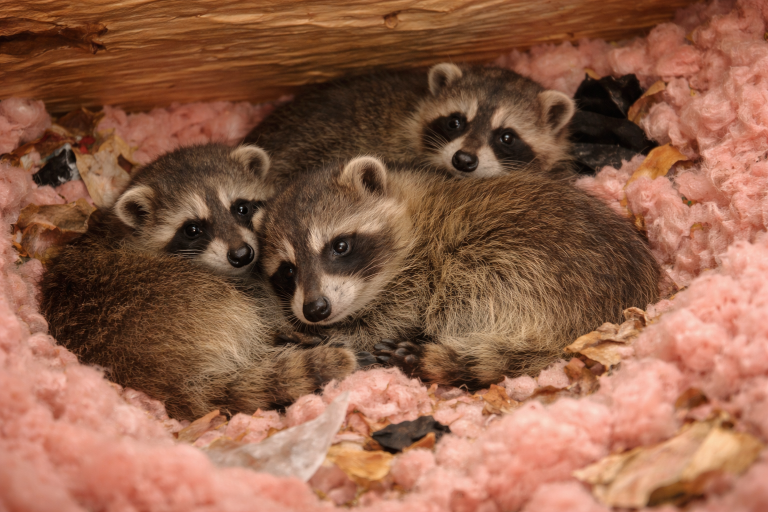
Female raccoons typically give birth between March and June. They seek out secure nesting sites before the babies arrive. Once inside, they tear insulation apart to create a soft den. Many homeowners do not realize raccoons are present until the babies begin making noise.
Signs You Have Baby Raccoons in the Attic
Unlike adult raccoons, which are primarily nocturnal, mother raccoons with babies may move around during the day. Other signs include torn insulation, roof vent damage, and visible raccoon activity on your roofline at night. If you notice both roof damage and baby-like sounds, it is likely a mother raccoon has established a den.
Adult raccoons are noisy, but baby raccoons have a distinct sound. Instead of heavy footsteps, you may hear:
- High-pitched chirping or squeaking
- Soft crying noises
- Scratching combined with light scurrying
- Increased daytime activity
What to Do If You Suspect Baby Raccoons
The most important step is to remain calm and avoid rushing into action. Removing wildlife improperly can cause greater problems. Time is important. The longer raccoons remain in your attic, the more insulation damage and contamination occurs.
First, confirm the location of the activity. Try to determine whether the sounds are coming from the attic, walls, or chimney. Avoid entering the attic directly if you suspect a mother raccoon is present, as she may become defensive.
Next, contact a professional wildlife removal company experienced in raccoon removal in Hamilton. A trained technician will inspect the attic, confirm the presence of babies, and determine the safest removal plan.
What Not to Do
Homeowners often make mistakes when trying to deal with baby raccoons on their own. Improper removal often leads to additional costs and repeat service calls.
Do not seal entry points immediately. If the mother raccoon is outside when you block the hole, she will attempt to re-enter. This can result in significant roof damage. If the babies are trapped inside without the mother, they may die, leading to odor and sanitation issues.
Do not attempt to trap the mother without confirming whether babies are present. Removing the adult raccoon while leaving the babies inside creates a serious problem.
Do not use loud noises, bright lights, or chemical repellents. These methods rarely work and can agitate the animals.
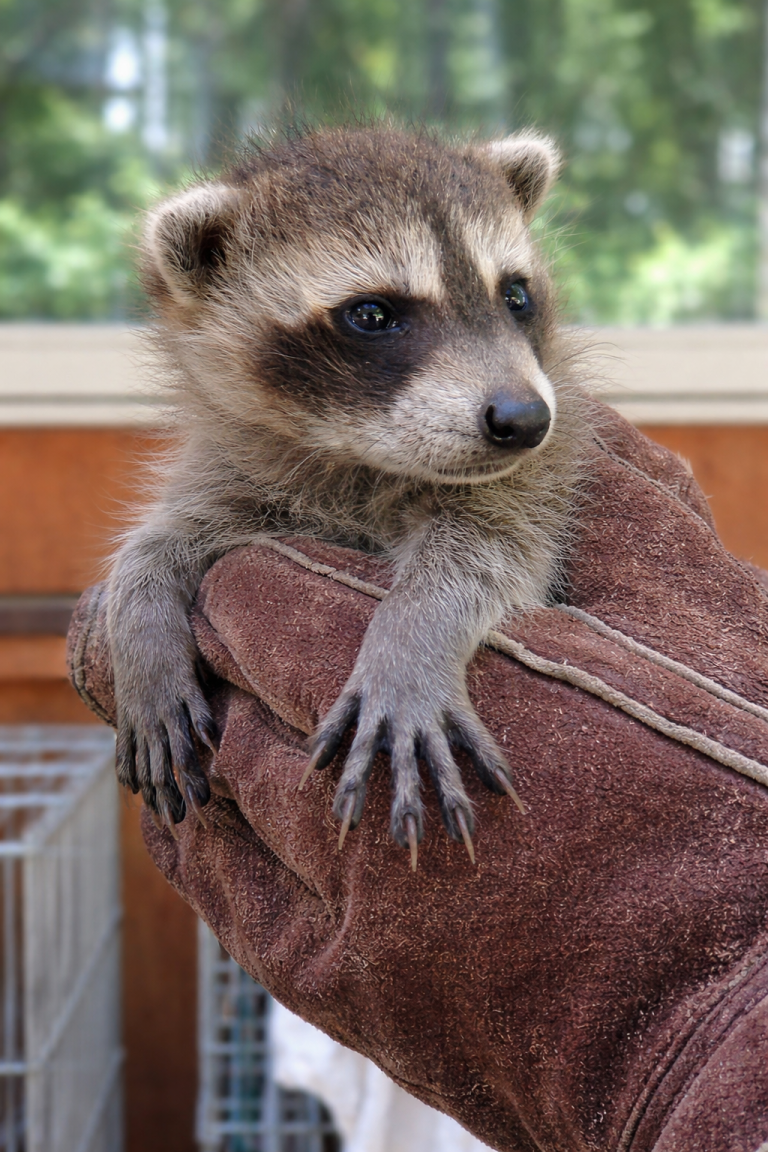
Do not attempt to handle baby raccoons yourself. Even young animals can carry parasites and bacteria.
Why Baby Raccoon Removal Requires Experience
Removing a mother raccoon with babies is more complex than removing a single animal. The goal is to reunite the family outside the attic safely and humanely.
Professional wildlife technicians use specialized techniques to remove babies from the attic and place them in a secure reunion box outside the home. The mother then relocates them to a new den site. Once the attic is confirmed empty, entry points are permanently sealed. This process requires careful timing and knowledge of raccoon behavior. It ensures the animals are not harmed and prevents them from attempting to return.
The Damage Baby Raccoons Cause in Attics
Even small raccoon kits can contribute to attic damage. Nesting behavior involves pulling insulation into piles and flattening large areas. Over time, contamination from droppings and urine creates odor and potential health concerns. The sooner removal occurs, the lower the restoration cost.
If left for weeks or months, the damage may include:
- Insulation compression reducing energy efficiency
- Wood staining
- Mold growth
- Ceiling discoloration
Health Concerns Associated with Raccoon Nesting
Raccoon droppings may carry parasites such as roundworm. While transmission risk is relatively low, contaminated insulation and dust should be handled carefully. Direct contact with raccoon waste should always be avoided. Professional cleanup ensures proper sanitation and minimizes health risks. Strong odors in the attic are also a sign that contamination may have occurred.
Why Waiting for Them to Leave Is Risky
Some homeowners hope the raccoons will simply move out on their own once the babies grow. While it is true that raccoons do not stay in attics permanently, waiting carries risks. The longer the family remains, the more structural damage accumulates. Once the babies are mobile, they may explore additional areas of the attic or walls.
Even after leaving, raccoons often return to previously used den sites in future seasons unless the entry points are properly sealed. Professional exclusion work ensures your attic is no longer accessible.
Preventing Future Raccoon Nesting
After removal, preventing re-entry is essential. Homes in Hamilton with aging roof vents or loose soffits are especially vulnerable. Reinforcing entry points with durable materials protects against future intrusion. Installing heavy-duty vent covers and securing chimney caps reduces risk. Annual roof inspections help identify weaknesses before wildlife exploits them. Preventative maintenance is often less expensive than emergency removal.
When to Call for Professional Help
If you hear chirping in the attic during spring, see raccoons on your roof, or notice insulation damage, schedule an inspection immediately. Delaying action increases repair costs and complicates removal. A professional wildlife technician can confirm whether babies are present and develop a safe removal plan.
Book Humane Raccoon Removal with Hamilton Wildlife
If you suspect baby raccoons in your attic, professional help ensures safe, humane removal and permanent prevention. Hamilton Wildlife specializes in raccoon removal throughout Hamilton, including baby raccoon situations during spring nesting season. Our team understands local wildlife patterns and uses humane reunion techniques to protect both your home and the animals.
Do not risk sealing babies inside or worsening attic damage. Contact Hamilton Wildlife today to book your inspection and secure your home from unwanted raccoon nesting.