
Bats are a natural and important part of the ecosystem, especially in areas like Hamilton, where they help control insect populations throughout the warmer months. While they are beneficial outdoors, bats become a concern when they move into a home. Attics, wall voids, and rooflines provide ideal roosting spaces, and once bats establish themselves inside, they can be difficult to remove without proper methods.
Because bats are quiet and active at dusk and overnight, many infestations go unnoticed at first. By the time homeowners realize something is wrong, a colony may already be established. Recognizing the early signs of bats in the attic can help you address the problem before it leads to contamination or costly repairs.
This guide explains how to identify bat activity in your attic, what makes Hamilton homes vulnerable, and what steps to take if you suspect bats are present.
Why Bats Choose Attics
Bats naturally look for sheltered spaces that mimic caves or tree hollows. Attics provide warmth, darkness, and safety from predators. These conditions are especially attractive during spring and summer when female bats form maternity colonies to raise their young.
Hamilton homes often provide easy access points for bats. Small gaps along rooflines, soffits, and vents can allow bats to enter. Because bats can squeeze through openings as small as a finger-width, even well-maintained homes can be vulnerable. Once inside, bats tend to return to the same roost year after year unless the entry points are properly sealed.
Seeing Bats at Dusk Around Your Roofline
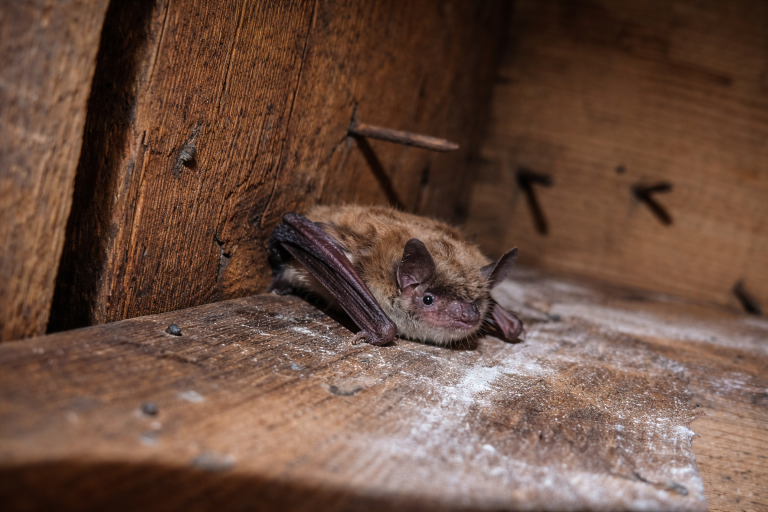
One of the earliest signs of a bat problem is noticing bats flying near your home at dusk. Bats typically leave their roost shortly after sunset to feed. If you consistently see bats exiting from the same area of your roofline, chimney, or soffit, there is a strong chance they are roosting inside.
This behaviour is often overlooked at first, but repeated sightings in the same location are a clear indicator of an entry point. Watching your home for a few minutes at dusk can provide valuable clues about bat activity.
Light Scratching or Fluttering Sounds
Bats are much quieter than other wildlife. Unlike raccoons or squirrels, they do not produce loud footsteps or heavy movement. Instead, homeowners may hear faint scratching, fluttering, or rustling sounds coming from the attic or walls. These noises are often most noticeable late in the evening or early in the morning. Because the sounds are subtle, they are easy to dismiss. However, consistent light movement in the attic during nighttime hours can indicate bat activity.
Bat Guano Accumulation
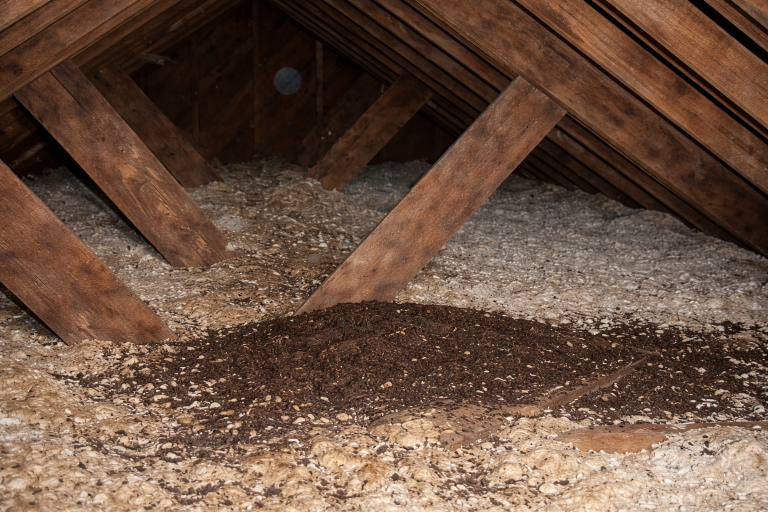
One of the most recognizable signs of bats in the attic is the presence of guano. Bat droppings are small, dark pellets that resemble mouse droppings but often accumulate in larger piles.
Guano is typically found:
- On attic insulation
- Near entry points
- Along attic floor joists
- On exterior walls beneath openings
Over time, these droppings can build up significantly, especially if a colony is present. Unlike other wildlife waste, bat guano tends to crumble easily and may contain small shiny fragments from insect remains.
Strong Odour in the Attic
As guano accumulates, it can create a strong, musty odour. This smell may become noticeable inside the home, especially near ceiling vents or attic access points.
In warm weather, the odour can intensify as heat increases the breakdown of organic material. If you notice an unexplained smell coming from above your ceiling combined with other signs, bat activity should be considered.
Dark Staining Around Entry Points
Bats often leave visible staining around the areas they use to enter and exit a home. These marks are caused by oils and dirt on their fur.
Over time, these stains appear as dark smudges along:
- Roof edges
- Soffits
- Vent openings
- Small cracks in siding
Because bats use the same entry points repeatedly, the staining becomes more noticeable. Inspecting your roofline for these marks can help identify where bats are getting inside.
Bats Found Inside the Living Space
In some cases, bats may accidentally enter the living areas of a home. This usually happens when they become disoriented or find their way through gaps from the attic.
Finding a bat inside your home is a strong indication that there may be a larger issue in the attic or walls. If this occurs, direct contact should be avoided. Professional assistance is recommended to safely remove the bat and inspect the home.
Increased Activity During Summer Months
Bat infestations are often most noticeable during the summer. This is when maternity colonies are active, and the number of bats in a roost increases.
During this time, you may notice:
- More frequent sightings at dusk
- Increased guano accumulation
- More consistent attic sounds
Understanding this seasonal pattern helps homeowners recognize when to be especially alert for signs of bat activity.
Why Ignoring Bat Activity Can Lead to Problems
Bats may seem harmless because they are quiet and rarely seen indoors. However, over time, their presence can lead to serious issues. Guano buildup can damage insulation and create sanitation concerns. The longer it remains, the more difficult it becomes to clean.
In addition, bats often return to the same roosting sites year after year. Without proper exclusion, the problem may continue season after season. Addressing bat activity early helps prevent long-term damage and contamination.
Why DIY Bat Removal Is Risky
Bat removal is not as simple as sealing an entry point. If bats are trapped inside, they may find their way into living spaces or die within the structure. There are also legal considerations. Bats are protected species in Ontario, and removal must follow specific guidelines, particularly during maternity season.
Handling bats directly can also pose health risks. Professional removal ensures the process is done safely and in compliance with regulations.
How Professional Bat Removal Works
Professional bat removal focuses on exclusion rather than trapping. A wildlife technician begins with a detailed inspection to locate entry points and assess the level of activity. Once the appropriate timing allows, one-way exclusion devices are installed. These devices allow bats to leave the attic naturally while preventing them from re-entering.
After all bats have exited, the entry points are permanently sealed using durable materials. This step is critical to prevent future infestations. If guano contamination is significant, cleanup and insulation restoration may be recommended.
When to Call for Bat Removal
If you notice bats flying around your roofline, hear light noises in the attic at night, or see droppings accumulating, it is time to schedule an inspection.
Bat problems do not resolve on their own. Early action reduces the risk of damage and ensures removal can be completed properly. Even if you are unsure whether bats are present, a professional inspection can provide clarity.
Book Bat Removal with Hamilton Wildlife
If you suspect bats in your attic, professional help ensures safe, humane, and effective removal. Hamilton Wildlife provides expert bat removal services throughout Hamilton. Our team understands local wildlife laws, seasonal restrictions, and proper exclusion techniques to protect your home.
Don’t ignore the signs of bat activity. Contact Hamilton Wildlife today to book an inspection and secure your home from unwanted wildlife.