
Raccoons are among the most destructive wildlife species that homeowners encounter in Hamilton. While many people think of raccoons as nuisance animals that tip over garbage bins or wander through neighborhoods at night, the real damage often occurs when they gain access to a home.
A raccoon living in an attic can cause extensive damage to roofing materials, soffits, insulation, and other structural components. What begins as a small entry hole can quickly become a costly repair project if the problem is not addressed promptly. Understanding how raccoons damage homes and recognizing the warning signs early can help homeowners avoid expensive repairs and ongoing wildlife issues.
Why Raccoons Target Homes
Raccoons are constantly searching for safe places to shelter from the weather and raise their young. Attics provide everything they need. They are warm, dry, protected from predators, and often undisturbed for long periods of time.
During the spring, female raccoons frequently seek out attic spaces to establish dens for their babies. In the fall and winter, attics offer protection from cold temperatures and harsh weather conditions. Unfortunately, getting inside usually requires damaging part of the home.
How Raccoons Damage Roofs
One of the first areas affected by raccoon activity is the roof. Raccoons are surprisingly strong and capable climbers. They can easily scale downspouts, trees, fences, and exterior walls to reach the roof. Once there, they begin searching for vulnerable areas where they can gain entry.
Roof vents are one of the most common targets. Many older vent covers can be bent, pulled apart, or completely torn off by a determined raccoon. Once the vent is damaged, the animal can enter the attic through the opening. Shingles can also be damaged during entry attempts. Raccoons may pull back roofing materials to expose gaps underneath. While this damage may initially appear minor, it can allow water infiltration that leads to leaks and additional structural problems. Even when raccoons are unsuccessful in entering the home, repeated attempts can weaken roofing materials and create maintenance issues.
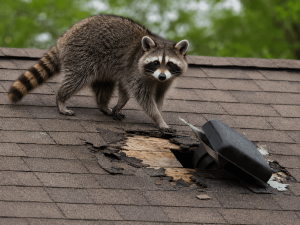
Soffit Damage Caused by Raccoons
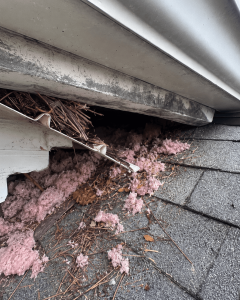
Soffits are among the most common entry points used by raccoons. The soffit is the underside section of the roof overhang. While it helps protect the home and supports attic ventilation, it is often one of the weaker exterior components.
Raccoons frequently discover small gaps where soffits meet the roofline. Using their claws and strength, they can enlarge these openings and tear apart aluminum, vinyl, or wooden soffit materials. Many homeowners first discover a raccoon problem when they notice insulation hanging out of a damaged soffit area. This occurs because raccoons often pull insulation toward the opening while creating access into the attic.
In severe cases, entire soffit panels can be torn away from the home.Repairing soffit damage quickly is important because these openings can attract additional wildlife species such as squirrels, birds, bats, and mice.
Attic Damage Can Become Extensive
Once a raccoon enters the attic, the damage often accelerates. Raccoons are much larger than most attic-dwelling wildlife species. An adult raccoon can weigh between 10 and 25 pounds, and their size allows them to create significant disruption as they move through the attic.
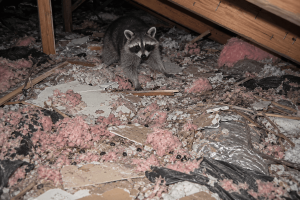
Insulation is often one of the first things affected. Raccoons flatten, compress, and displace insulation while creating pathways and nesting areas. This reduces the insulation’s effectiveness and can increase heating and cooling costs throughout the year. Female raccoons preparing a den frequently tear insulation apart to create a comfortable nesting area for their young. Over time, large sections of the attic may require insulation replacement.
Contamination from Droppings and Urine
One of the most serious consequences of a raccoon infestation is contamination. Raccoons typically establish bathroom areas within the attic. These locations may accumulate significant amounts of droppings and urine over time.
The contamination often soaks into insulation and surrounding building materials. Strong odours may eventually enter the living areas of the home through ceiling fixtures, attic hatches, or ventilation systems.
Beyond the odour concerns, contaminated insulation usually requires removal and replacement once the raccoons have been removed. The longer raccoons remain inside the attic, the more extensive the cleanup becomes.
Structural Damage Inside the Attic
Raccoons do not simply occupy attics. They actively alter the space. As they move around, they may damage ductwork, ventilation systems, and stored belongings. Cardboard boxes, holiday decorations, and other stored items often become nesting materials or are damaged by contamination.
In some cases, raccoons may tear vapour barriers, pull apart insulation baffles, or damage other attic components while creating pathways. The combination of physical damage and contamination often makes attic restoration one of the largest expenses associated with raccoon infestations.
The Problem Gets Worse During Baby Season
Spring is one of the busiest times of year for raccoon problems in Hamilton. Female raccoons actively search for secure den sites where they can raise their young. Attics are one of their preferred locations. When babies are present, homeowners may hear frequent vocalizations, movement, and scratching noises throughout the day and night.
Many people mistakenly assume the noises will disappear on their own. Instead, the activity usually increases as the babies grow. Attempting to seal entry points during baby season can create additional problems if young raccoons remain trapped inside. This is why professional wildlife removal is especially important during nesting season.
Warning Signs of Raccoon Damage
Homeowners often notice signs of raccoon activity before they actually see the animal. Heavy thumping noises coming from the attic are one of the most common indicators. Unlike squirrels or mice, raccoons are large animals, and their movement often sounds similar to a person walking overhead.
Visible damage along the roofline is another warning sign. Bent soffits, loose vents, displaced shingles, and insulation protruding from openings often indicate active wildlife entry. Some homeowners also notice dark staining, strong odors, or unusual sounds coming from walls and ceilings. Addressing these signs early can significantly reduce repair costs.
Why DIY Removal Often Creates More Damage
Many homeowners attempt to solve raccoon problems themselves by blocking openings or trying to scare the animals away. This approach often creates additional issues. If babies are present, sealing the entry point can trap them inside the attic. The mother may then attempt to create new openings elsewhere in the home to regain access.
Improper removal efforts can also result in separated family groups, increased structural damage, and recurring infestations. Successful raccoon removal requires identifying all entry points, determining whether young are present, and ensuring the home is properly secured afterward.
How Professional Raccoon Removal Protects Your Home
Professional raccoon removal focuses on more than simply removing the animal. The process begins with a thorough inspection of the roof, soffits, vents, and attic space. A wildlife technician identifies the entry point and assesses the extent of the damage. Humane one-way doors are typically installed to allow raccoons to leave while preventing them from returning. If babies are present, they are safely removed and reunited with the mother outside the structure whenever possible.
After the animals are gone, damaged entry points are professionally repaired and reinforced to prevent future wildlife access. This exclusion work is critical because raccoons often return to successful den sites if openings remain available.
Preventing Future Raccoon Damage
Routine maintenance plays an important role in preventing raccoon problems. Homeowners should regularly inspect roof vents, soffits, fascia boards, and rooflines for signs of wear or damage. Tree branches that provide easy roof access should be trimmed back when possible.
Addressing small vulnerabilities before wildlife discovers them can prevent thousands of dollars in future repairs. A professional wildlife inspection can also identify potential entry points before they become active infestations.
Book Raccoon Removal with Hamilton Wildlife Removal
Raccoons can cause significant damage to roofs, soffits, and attics in a surprisingly short amount of time. The longer they remain inside a home, the more extensive and expensive the repairs often become.
Hamilton Wildlife Removal specializes in humane wildlife removal, attic inspections, and long-term exclusion solutions. Our team safely removes raccoons, identifies entry points, and helps protect your home from future wildlife problems. If you hear noises in your attic, notice damage along your roofline, or suspect raccoons have entered your home, contact Hamilton Wildlife Removal to schedule a professional inspection.