
Fall is an important time for wildlife prevention in Hamilton. As temperatures begin to drop and daylight hours become shorter, animals start preparing for the colder months ahead. Raccoons, squirrels, mice, rats, skunks, and bats may all spend more time searching for protected places to shelter.
For homeowners, that can mean increased activity around roofs, attics, garages, sheds, decks, and foundations. A small opening that went unnoticed throughout the summer can suddenly become an inviting entrance when outdoor conditions change.
Completing a fall wildlife prevention checklist can help you find vulnerable areas before animals move inside. The goal is not to eliminate wildlife from your property. It is to make sure your home does not provide easy access to the warm, protected spaces animals are looking for. Here is what Hamilton homeowners should inspect as fall approaches and what to do if you discover signs that wildlife has already moved in.
Why Wildlife Problems Increase During the Fall
Ontario wildlife has adapted to changing seasons. As summer ends, animals begin preparing for colder weather in different ways.
Squirrels remain active and spend considerable time collecting and storing food. Raccoons look for reliable food sources and sheltered resting areas. Mice and rats begin taking advantage of buildings that offer warmth, food, and protection. Skunks may establish dens beneath decks and sheds, while bats prepare for seasonal changes in their activity. Homes can offer exactly what these animals need.
An attic protects wildlife from wind, rain, snow, and predators. A space beneath a deck provides cover at ground level. Garages and sheds may contain nesting materials and potential food sources.
Preventing access before cold weather arrives is usually much easier than dealing with animals after they become established.
Inspect Your Roofline
Your roof should be one of the first areas included in a fall wildlife inspection. Raccoons and squirrels are excellent climbers and can access rooftops using trees, fences, downspouts, neighbouring structures, and other features around a property.
Once on the roof, they look for vulnerable areas. Pay attention to roof edges, intersections, dormers, valleys, and areas where different building materials meet. Look for gaps, lifted materials, chew marks, or sections that appear damaged.
A small defect may not seem significant from the ground, but wildlife can exploit weak building materials. Squirrels can enlarge openings by chewing, while raccoons can use their strength and dexterity to pull apart loose materials. If you notice obvious damage, it is worth having the area inspected before winter.
Check Soffits and Fascia
Soffits are another common wildlife entry point. These materials are located beneath the roof overhang and can become vulnerable because of age, weather damage, poor installation, or previous wildlife activity. Look for soffit panels that appear loose, bent, missing, or pushed upward. Dark staining or damage around one particular area may also indicate repeated animal activity.
Raccoons can sometimes force their way through weak soffits, while squirrels may chew around gaps until they are large enough to enter. Fascia boards should also be checked for deterioration or separation from surrounding materials. Because soffit and fascia damage often occurs high above the ground, some problems are difficult to see without a closer inspection.
Examine Roof and Attic Vents
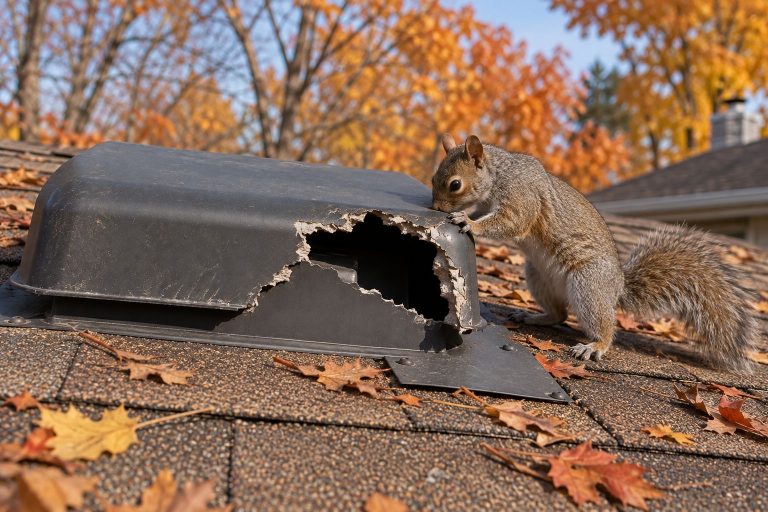
Roof vents provide necessary ventilation, but damaged or poorly protected vents can become wildlife entrances. Plastic components can deteriorate after years of exposure to sun, snow, wind, and temperature changes. Wildlife may also damage vents directly. Squirrels are especially capable of chewing through vulnerable materials. Raccoons can damage larger roof vents if they discover a weak point.
Inspect visible vents for cracks, missing pieces, lifted edges, or obvious chewing. If a vent appears damaged, do not automatically seal it if you suspect an animal is already inside. The attic should be checked first to determine whether the opening is active.
Look for Signs of Squirrels in the Attic
Squirrel activity in fall can become noticeable as squirrels explore potential shelter and food-storage locations. One of the most common signs is noise above the ceiling. Squirrels are primarily active during daylight hours, so scratching, running, or chewing sounds during the morning or afternoon may indicate activity in the attic.
Outside, watch for squirrels repeatedly travelling to the same area of the roof. You might see one disappear beneath a soffit, behind fascia, or around a roof vent. Inside an accessible attic, signs may include disturbed insulation, droppings, nesting debris, chew marks, or pathways through insulation. If you suspect squirrels are already inside, avoid closing the opening yourself until the situation has been assessed.
Check for Raccoon Damage
Raccoons can cause considerable damage when attempting to enter a home. Unlike small rodents that squeeze through tiny gaps, raccoons may physically pull apart weak building materials to create an entrance. Check soffits, roof vents, roof edges, chimneys, and areas where additions meet the original structure. Torn materials or unusually large openings can indicate raccoon activity.
Raccoons are mostly active at night, so homeowners may hear heavy movement, thumping, or scratching after dark. If you repeatedly see a raccoon climbing onto your roof, there may be a reason it is visiting. A wildlife inspection can determine whether it has established an entry point.
Inspect the Foundation for Rodent Entry Points
Not every fall wildlife problem begins on the roof. Mice and rats often enter at or near ground level. Walk around the exterior foundation and look closely at areas where utility lines, pipes, cables, vents, and other services enter the building. Gaps around these penetrations can provide rodents with access.
Also inspect garage door edges, exterior doors, foundation cracks, damaged siding, and openings beneath steps or additions. Mice can use remarkably small openings, which means gaps that look insignificant can still be important. Rodent prevention should focus on both exclusion and reducing the food and shelter available around the property.
Inspect Decks, Porches, and Sheds for Skunk Activity
Skunks commonly establish dens beneath structures rather than inside attics. Decks, sheds, porches, stairs, and additions can all provide protected spaces. If there is exposed soil around the perimeter, a skunk may dig underneath. Look for freshly disturbed soil, holes beneath structural edges, tracks, and recurring odours.
A skunk den entrance may be larger than the small holes created when skunks dig lawns looking for insects. If you suspect a skunk is living beneath a structure, do not simply fill the hole. The animal could still be underneath, and dependent young can also be present at certain times of year. Professional exclusion may involve a one-way system followed by securing the perimeter with appropriately installed wire mesh.
Check Your Attic Before Winter
If your attic is safely accessible, fall is a useful time to look for signs of wildlife. You do not necessarily need to see an animal to discover a problem. Check insulation for trails, flattened sections, nesting areas, droppings, or unusual debris. Look at accessible roof decking and structural wood for chewing or staining.
Pay attention to unusual odours as well. Bat guano, rodent droppings, raccoon waste, and urine can accumulate when wildlife has occupied an attic for an extended period. If you find significant droppings or contamination, avoid disturbing the material unnecessarily. Professional assessment may be appropriate before cleanup begins.
Pay Attention to Bat Entry Points
Bats require a different approach from raccoons and squirrels. They can enter buildings through very small gaps around roof edges, soffits, flashing, siding, vents, and other construction joints. A homeowner may not notice the entrance during the day because the opening can be difficult to see.
One useful clue is repeated bat activity around the same part of the house at dusk. If bats consistently emerge from or return to one section of the roofline, an established roost may be present. Bat exclusion also needs to be performed at an appropriate time of year. Seasonal activity and the possibility of dependent young must be considered before openings are sealed. If you suspect bats are using your home, have the structure inspected before attempting repairs.
Secure Garbage and Outdoor Food Sources
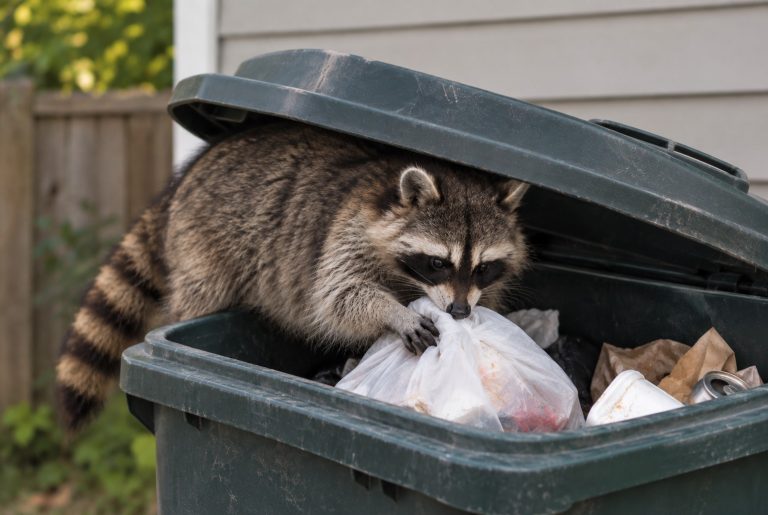
Wildlife prevention is not only about closing holes. Food can encourage animals to spend more time around a property, increasing the chance that they will discover a potential den or entry point. Garbage containers should have secure lids and should not be left overflowing. Clean up food waste around garbage storage areas.
Pet food should not be left outside overnight. Bird feeders can also attract more than birds. Spilled seed may provide food for squirrels, mice, rats, and other animals. Regularly cleaning beneath feeders can help reduce this attraction. If fruit trees are present, collect fallen fruit rather than allowing it to accumulate on the ground.
Clean Up Around Garages and Sheds
Garages and sheds can provide both shelter and nesting material. Cardboard boxes, fabric, paper, stored grass seed, pet food, and other materials may attract rodents if they can access the structure. Whenever possible, store food products in durable, sealed containers.
Inspect the bottom of garage doors for gaps and check the corners of the building for damage. Weather stripping that has deteriorated should be replaced. Sheds should also be inspected around the base. Look for digging, gnawing, or gaps where the structure meets the ground. Keeping storage areas organized makes new wildlife or rodent activity easier to notice.
Trim Problem Vegetation Around the Home
Trees and shrubs are not inherently a wildlife problem, but certain vegetation can make access easier. Tree branches that extend directly over a roof provide squirrels with a convenient route onto the house. Dense vegetation around the foundation can also make it harder to notice burrows and entry points.
Consider trimming branches where appropriate and keeping areas around the foundation visible enough to inspect. Remember that removing a branch does not make a home wildlife-proof. Squirrels and raccoons are capable climbers, and they may reach the roof in other ways. Structural exclusion remains the most important defence.
Do Not Seal Active Wildlife Openings
Finding a hole during your fall inspection does not always mean you should close it immediately. First determine whether the opening is being actively used. Sealing wildlife inside an attic or wall cavity can turn a manageable problem into a much more complicated one. Trapped animals may damage additional parts of the building while attempting to escape.
If a mother is separated from their dependent young, she may also attempt to force her way back inside. Watch the area for activity and look for signs such as fresh damage, droppings, tracks, staining, or noises from inside. When you are unsure, a professional wildlife inspection is safer than guessing.
Address Existing Wildlife Problems Before Cold Weather
Fall is an excellent time to pay attention to wildlife activity because winter conditions can make existing problems more difficult. An animal that establishes a protected den or nesting area may continue using it as temperatures fall. Early intervention can also help limit property damage.
Squirrels and rodents may chew materials inside an attic. Raccoons can damage insulation and building materials. Skunks can excavate beneath structures, while rodents may establish nesting areas close to stored food. If you are already hearing noises or seeing animals enter the structure, prevention alone is no longer enough. The active wildlife problem needs to be resolved before permanent repairs are completed.
What Does Professional Wildlife Exclusion Involve?
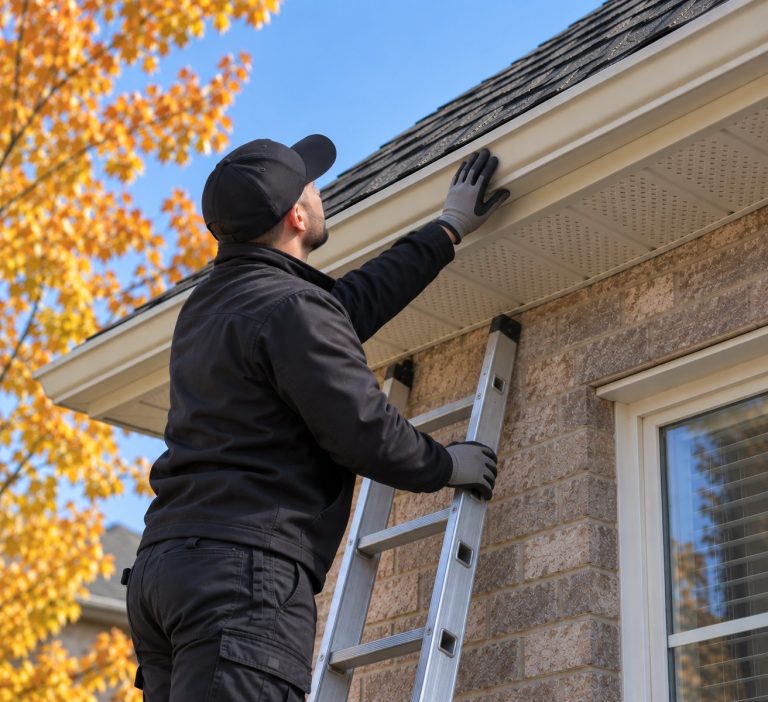
Professional wildlife control typically begins with identifying the species and active entry point. When appropriate, a one-way door can be installed over the entrance. This allows the animal to leave but prevents it from returning through the same opening. Other vulnerable areas may also be reinforced to stop the animal from simply creating another entrance nearby.
Once the wildlife has exited, the one-way device can be removed and the remaining opening secured. For ground-dwelling wildlife such as skunks, exclusion may involve wire mesh installed along the perimeter of a deck, shed, or other structure to prevent future digging. The exact method depends on the species, property, season, and location of the entry point.
A Simple Fall Wildlife Prevention Checklist
As you prepare your home for colder weather, focus on these key areas:
- Inspect soffits, fascia, roof vents, shingles, and roof intersections for damage.
- Look for holes, digging, droppings, tracks, nesting material, and chew marks.
- Check the foundation, garage doors, utility penetrations, decks, sheds, and porches for openings.
- Secure garbage, pet food, bird seed, and other potential food sources.
- Pay attention to scratching, running, chewing, or thumping sounds in ceilings and walls.
- Watch for wildlife repeatedly entering or exiting the same area of the property.
- Have active wildlife problems addressed before sealing entry points.
You do not need to make your property completely unattractive to wildlife. The priority is preventing animals from gaining access to the house and other structures.
Fall Wildlife Prevention in Hamilton
September and the rest of the fall season provide a valuable opportunity to inspect your home before colder Ontario weather arrives. Wildlife activity around your property does not necessarily mean animals are living inside. However, repeated roof activity, unusual noises, damaged soffits, burrows, droppings, or visible entry points should not be ignored.
Catching these warning signs early can make it easier to address the problem before an animal becomes established. A professional wildlife inspection in Hamilton can also identify vulnerable areas that may be difficult to see from ground level.
Book a Fall Wildlife Inspection with Hamilton Wildlife
If you want to prepare your home for the colder months, Hamilton Wildlife can help identify signs of raccoons, squirrels, skunks, bats, rodents, and other wildlife around your property. Our technicians can inspect the exterior of your home, identify active entry points and vulnerable areas, and recommend appropriate exclusion or repair options based on what we find.
If wildlife has already moved inside, we can develop a humane removal and exclusion plan rather than simply sealing the animal in. Contact Hamilton Wildlife today to book your wildlife inspection and help protect your home before winter wildlife activity begins.