
Homeowners in Hamilton deal with a wide range of wildlife issues every year. From raccoons tearing into attics to skunks digging under decks, urban wildlife has adapted extremely well to residential neighborhoods. Hamilton’s location near the escarpment, conservation areas, and older tree-lined communities makes it especially attractive to animals searching for shelter and food.
Understanding the most common wildlife problems in Hamilton homes helps property owners act quickly, prevent damage, and protect their investment. This guide outlines the top wildlife concerns in the area, the warning signs to watch for, and why professional wildlife removal is essential.
Why Hamilton Homes Attract Wildlife
Hamilton provides ideal conditions for wildlife survival. Many neighborhoods have mature trees, accessible rooftops, aging soffits, and quiet attic spaces. Add garbage bins, pet food, and backyard gardens, and it becomes easy to see why animals settle in. Older homes in particular are vulnerable because of roofline gaps, worn vent covers, and construction seams that weaken over time.
Seasonal weather also plays a major role. Wildlife problems typically increase during:
- Late winter and early spring (breeding season)
- Fall (animals preparing for cold temperatures)
- Extreme cold snaps (seeking warmth indoors)
Raccoons in Attics
Raccoons are one of the most common wildlife problems in Hamilton homes. These animals are strong, intelligent, and highly adaptable. They frequently tear open roof vents, soffits, and weak shingles to access attics.
Signs of Raccoons in Your Home:
- Heavy thumping or walking sounds at night
- Damage to roof vents or shingles
- Strong odour from droppings
- Insulation torn or flattened
Once inside, raccoons create nesting areas by shredding insulation. They may also contaminate the attic with droppings and urine, creating health risks and expensive repair bills. Spring is particularly active due to raccoon birthing season. Female raccoons often choose attics as safe spaces to raise their young.
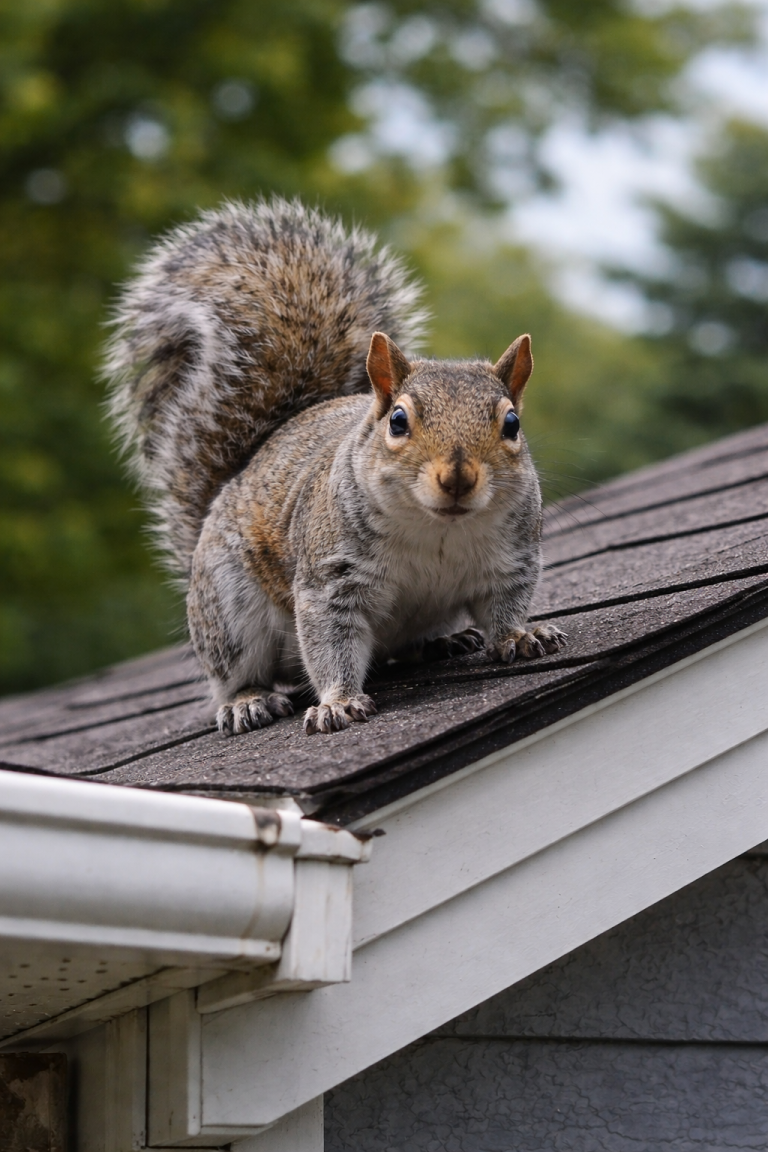
Squirrels in Soffits and Rooflines
Squirrels are smaller than raccoons but can be just as destructive. They chew through wood, aluminum soffits, fascia boards, and even plastic vent covers. Unlike raccoons, squirrels are active during the day. Homeowners often hear scratching or rapid movement in the morning or afternoon.
Common Entry Points:
- Gaps along roof edges
- Loose soffit panels
- Chimneys
- Construction joints
Squirrels are persistent chewers. If one entry point is sealed improperly, they may create another nearby. Left unchecked, squirrel activity can damage wiring and insulation, increasing fire risk.
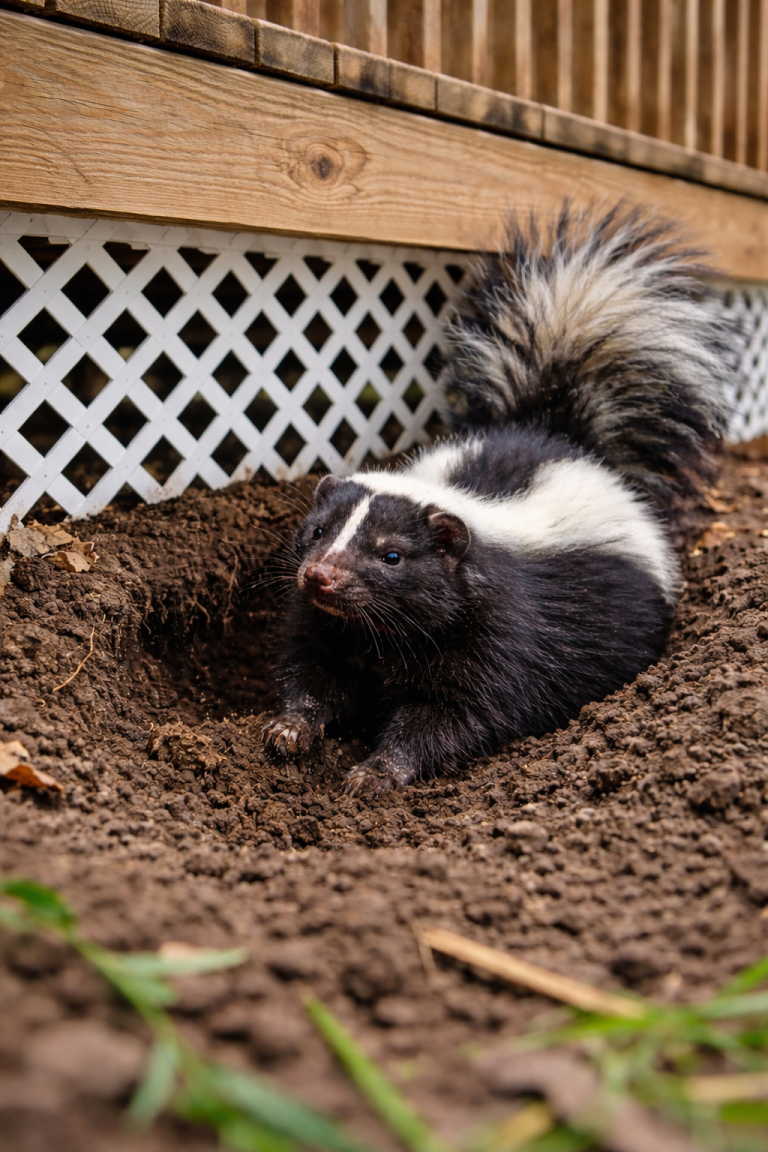
Skunks Under Decks and Porches
Skunks are another frequent wildlife concern in Hamilton neighbourhoods. They prefer sheltered spaces close to the ground, especially under decks, sheds, and porches.
Signs of Skunks:
- Distinct odour around the home
- Small digging holes near foundations
- Nocturnal activity in the yard
- Lawn damage from foraging
Skunks dig shallow holes while searching for grubs and insects. During breeding season, female skunks often den under structures to raise their young. Attempting to remove skunks without professional guidance can result in spraying incidents, which are difficult and costly to clean.
Birds Nesting in Vents
Birds commonly enter bathroom and kitchen vents to build nests. These nests block airflow and can create moisture buildup or even fire hazards if located near exhaust systems. Removing birds improperly can violate wildlife regulations, particularly during nesting season. Professional bird removal ensures compliance with Ontario wildlife laws.
Common bird issues in Hamilton include:
- Chirping sounds inside walls
- Vent covers missing or damaged
- Feathers or nesting debris near openings
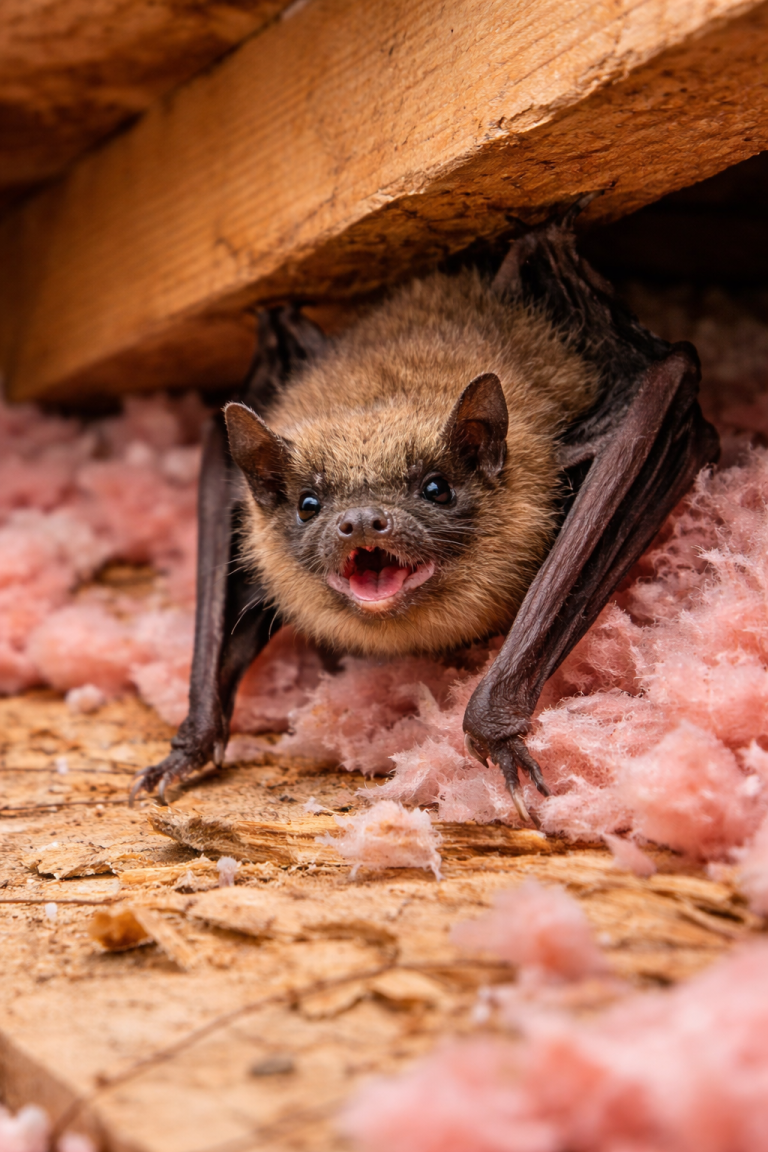
Bats in Attics
Although less common than raccoons or squirrels, bats do occasionally roost in Hamilton attics. They enter through very small gaps along rooflines. Bat removal requires careful timing and adherence to provincial guidelines. Exclusion methods must be done correctly to prevent trapping bats inside.
Signs of bat activity include:
- High-pitched noises at dusk
- Droppings near attic access
- Staining near entry points
Mice and Rodents
While larger wildlife often gets attention, rodents remain a serious issue in Hamilton homes. Mice can squeeze through openings as small as a dime. Rodents contaminate insulation, chew wiring, and multiply quickly. Homes near ravines or wooded areas are particularly vulnerable. Early detection is critical to preventing infestations from spreading.
Common rodent signs include:
- Droppings in cupboards
- Scratching in walls
- Chewed food packaging
- Gnaw marks on wiring or baseboards
The Hidden Damage Wildlife Causes
Wildlife damage is often more extensive than homeowners expect. Beyond visible holes or noises, problems can include:
- Structural wood damage
- Mold growth from contaminated insulation
- Electrical fire risks
- Insulation compression reducing energy efficiency
- Lingering odors
Insulation damage alone can significantly impact heating and cooling costs. Many homeowners delay calling for help, hoping the problem will resolve itself. In most cases, wildlife remains until professionally removed.
Why DIY Wildlife Removal Is Risky
Homeowners sometimes attempt to trap or block animals themselves. This often leads to:
- Animals trapped inside walls
- Separated mothers and babies
- Dead animals creating odor issues
- Repeat infestations
Wildlife removal in Ontario must follow specific regulations. Humane exclusion methods are required for many species. Sealing entry points without identifying all access areas typically results in animals finding new openings.
How Professional Wildlife Removal Works
A professional wildlife removal process includes more than simply removing the animal. It focuses on long-term prevention.
Thorough Inspection
Technicians identify:
- Active entry points
- Secondary vulnerabilities
- Species involved
- Structural damage
Humane Removal
Animals are removed using one-way doors or species-specific techniques. This allows them to exit safely without re-entry.
Exclusion and Sealing
Entry points are reinforced with durable materials. Vent covers, soffit repairs, and structural sealing prevent future access.
Cleanup and Restoration
Contaminated insulation and droppings are removed when necessary. This reduces odor and health risks.
Prevention Tips for Hamilton Homeowners
Proactive maintenance significantly reduces wildlife risk. Even small gaps can become wildlife entry points over time.
Homeowners should:
- Inspect rooflines annually
- Install secure vent covers
- Trim tree branches away from roofs
- Store garbage in sealed bins
- Avoid leaving pet food outdoors
- Repair soffit and fascia damage promptly
When to Call for Wildlife Removal in Hamilton
If you hear scratching in your attic, notice roof damage, or detect unusual odors, it’s time to schedule an inspection. Acting quickly prevents larger repair bills and reduces stress. Delaying wildlife removal can allow breeding cycles to begin, making removal more complex.
Book Professional Wildlife Removal with Hamilton Wildlife
If you’re experiencing wildlife problems or want to protect your home before issues start, professional help is the safest option. Hamilton Wildlife specializes in humane wildlife removal and long-term prevention for homeowners throughout Hamilton. Our team understands local wildlife behavior and provides permanent solutions tailored to your home.
Protect your attic, roofline, and foundation before minor activity turns into major damage. Contact Hamilton Wildlife today to book your inspection and secure your home from unwanted wildlife.