
Mice are one of the most common household pests in Hamilton. These small rodents can enter homes through tiny openings and quickly establish nests inside walls, basements, kitchens, and attics. While a single mouse may not seem like a major concern, mice reproduce quickly and infestations can grow rapidly if the problem is not addressed early.
For homeowners in Hamilton, mouse activity often increases as temperatures drop and rodents search for warm shelter. Understanding how mice enter homes, the risks they create, and how professional mouse removal works can help protect your property and your family’s health.
This guide explains what homeowners should know about mouse removal in Hamilton, including the warning signs of an infestation, why mice target homes, and how professional pest control solutions eliminate the problem.

Why Mice Enter Homes in Hamilton
Mice are highly adaptable and thrive in urban environments. Hamilton’s mix of older homes, dense neighborhoods, and nearby green spaces provides plenty of food sources and shelter opportunities for rodents.
When outdoor temperatures drop in fall and winter, mice begin searching for warm indoor spaces. Even newer homes can become targets if small gaps or construction openings are present. Mice only need an opening about the size of a dime to enter a structure. Once inside, they typically nest in quiet areas such as wall cavities, basements, storage rooms, or attics.
Food sources also attract mice. Kitchens, pantries, and garbage areas provide easy access to crumbs and food waste. If mice find both shelter and food inside a home, they may remain indefinitely.
Signs of Mice in Your Home
Many mouse infestations begin quietly. The early warning signs can be subtle, which is why problems often grow before homeowners realize what is happening.
One of the most common indicators is the presence of droppings. Mouse droppings are small, dark pellets that often appear near food sources, cupboards, or baseboards. They may also be found in drawers, behind appliances, or along attic beams. Another sign is scratching or rustling sounds coming from walls or ceilings. Mice are most active at night, so these noises are often heard after the home becomes quiet.
Homeowners may also notice gnaw marks on food packaging or wooden surfaces. Mice chew constantly to keep their teeth from overgrowing. This chewing behavior can damage furniture, cabinetry, and even electrical wiring. In some cases, a musty odor develops when mice establish nests inside walls or hidden areas.
How Mice Enter Hamilton Homes
Mice are excellent climbers and can squeeze through extremely small spaces. They often enter homes through foundation gaps, utility openings, vents, and cracks along siding.
Older homes in Hamilton may have worn seals or small structural gaps that rodents can exploit. Even newer homes may have construction openings that allow mice to enter.
Common entry areas include:
- Gaps around pipes or utility lines
- Small cracks in foundations
- Openings beneath doors
- Roofline or attic ventilation gaps
Because mice can travel through wall cavities, the entry point is not always near the area where activity is noticed. A professional inspection is usually required to identify the source of the problem.

Why Mice Are More Than Just a Nuisance
Some homeowners view mice as minor pests, but rodent infestations can create serious issues inside a home. Mice contaminate surfaces and food with droppings and urine. This contamination can spread bacteria and allergens that affect indoor air quality. Electrical damage is another concern. Mice frequently chew on wiring, which can increase the risk of electrical fires.
In addition to structural risks, mice reproduce rapidly. A single female mouse can produce multiple litters each year. Without intervention, a small infestation can quickly turn into a widespread problem throughout the home. The longer mice remain inside, the more difficult the infestation becomes to eliminate.
Reasons DIY Mouse Control Often Falls Short
Homeowners often attempt to control mice using store-bought traps or bait. While these tools may catch a few mice, they rarely solve the root of the problem. If entry points remain open, new mice will continue to enter the home. This is why infestations often return shortly after DIY treatments. Improper bait placement can also lead to mice dying in inaccessible areas such as wall cavities. This can create unpleasant odors that persist for weeks. Effective mouse removal requires identifying how rodents are entering and preventing future access.
Why Hamilton Homes Are Vulnerable to Mice
Hamilton’s climate plays a role in rodent activity. Cold winters drive mice indoors, and dense urban neighborhoods provide easy travel routes between buildings. Homes located near ravines, wooded areas, or parks may experience higher rodent pressure. Older neighborhoods with aging infrastructure may also have more entry opportunities.
Even homes that have never experienced a rodent problem before can become vulnerable if small structural gaps develop. Regular inspections and preventative maintenance help reduce the risk.
How Professional Mouse Control Works
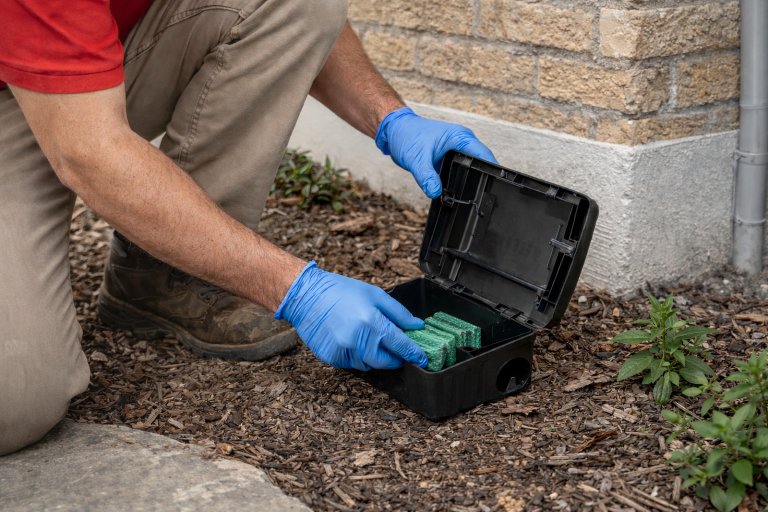
Professional mouse control focuses on both elimination and prevention. A trained technician begins by inspecting the property to determine where mice are entering and nesting. Once the activity areas are identified, treatment is implemented to reduce the population inside the home. This may involve strategic placement of traps or rodent stations.
The most important step is exclusion. Small openings around the exterior of the home are sealed using durable materials. This prevents new mice from entering once the existing rodents are removed. Exterior rodent control measures may also be used to reduce mouse activity around the property. By addressing both the infestation and the entry points, professional mouse removal provides longer-lasting results.
Preventing Future Mouse Problems
Keeping mice out of your home begins with proper maintenance. Sealing small cracks and openings around the exterior prevents rodents from finding entry points.
Food storage also plays a role. Keeping pantry items sealed and cleaning up crumbs reduces the likelihood of attracting mice indoors. Garbage containers should remain closed and stored away from entry points. Pet food should also be kept in sealed containers. While these measures reduce risk, professional exclusion work offers the strongest protection.
When to Call for Mouse Removal
If you notice droppings, hear scratching in the walls, or see mice inside your home, it is best to act quickly. Rodent infestations grow rapidly, and waiting can allow the problem to spread to multiple areas of the home.
A professional inspection will confirm the extent of the infestation and determine the best removal strategy. Early intervention usually results in faster and more affordable solutions.
Book Mouse Removal with Hamilton Wildlife
If you suspect mice in your home, professional help can eliminate the infestation and prevent it from returning. Hamilton Wildlife provides expert rodent control services throughout Hamilton. Our team identifies entry points, removes active infestations, and seals vulnerable areas to protect your home long term.
Don’t wait for a small rodent problem to become a larger infestation. Contact Hamilton Wildlife today and take the first step toward a mouse-free home.