
Squirrels are a familiar sight throughout Ontario. They run along fences, climb mature trees, cross rooftops, and visit backyard bird feeders throughout much of the year. While seeing squirrels outdoors is usually nothing to worry about, problems can develop when they decide that an attic, soffit, roof cavity, or garage is a good place to build a nest.
Understanding squirrel nesting seasons in Ontario is particularly important for homeowners who suspect squirrels are living inside their house. Squirrels have specific periods when females give birth and care for their young. Removing or blocking an adult squirrel during these periods can leave dependent babies trapped inside.
Knowing when squirrels nest, what signs to watch for, and how professional squirrel removal works can help you deal with the problem safely and prevent unnecessary damage to your home.
When Is Squirrel Nesting Season in Ontario?
Squirrels in Ontario commonly have two breeding and nesting periods each year. Exact timing can vary depending on the species, weather conditions, food availability, and individual animals. The first nesting period generally begins during the winter, with young commonly born in late winter or early spring. A second breeding period can occur later in the year, resulting in another round of young during the summer.
This means homeowners may encounter squirrel nests containing dependent babies at different times between winter and late summer. It is important not to assume that an attic nest is empty simply because you only see one adult squirrel. Mothers frequently leave the nest to find food and return later to care for their young.
Why Squirrels Nest Inside Homes
In nature, squirrels commonly build nests in trees or use natural cavities. Residential properties offer another option. An attic can provide many of the qualities a squirrel looks for when choosing a nesting location. It is elevated, protected from predators, relatively dry, and sheltered from rain, wind, and sudden temperature changes.
Female squirrels preparing to give birth are especially motivated to find secure locations. If they discover a weak soffit, damaged roof vent, loose fascia board, or another opening, they may investigate it and attempt to gain access.
Squirrels are capable chewers, so an opening does not always need to be large enough when they first find it. They can gnaw around vulnerable building materials and enlarge an existing gap until they can enter. Once an attic provides reliable shelter, squirrels may continue using the property unless the entry point is properly addressed.
Where Do Squirrels Build Nests Around Houses?
Attics are one of the most common nesting locations, but squirrels can occupy several areas around a home. Roof intersections, soffits, fascia boards, roof vents, gable vents, and spaces beneath damaged shingles can all provide potential access. Squirrels may also enter detached garages, sheds, and other structures.
A homeowner might see a squirrel disappear beneath a roof edge without being able to see the actual opening from the ground. In other cases, an entry point may be obvious because the soffit has been pushed down or a vent has visible chewing around it. Some openings are hidden behind gutters or occur high on a roof, which is why a professional exterior inspection is often useful.
What Does a Squirrel Nest Look Like?
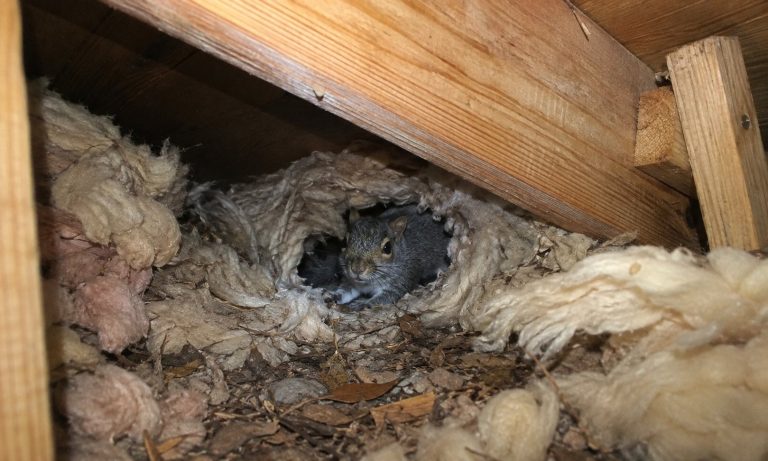
Outdoor squirrel nests are often constructed from leaves, twigs, bark, grass, and other natural materials. These nests are sometimes visible high in trees as large clusters of leaves. Inside an attic, squirrels have access to additional materials.
They may use attic insulation as part of their nesting area and can bring leaves, twigs, paper, or other debris inside. Insulation may become compressed, displaced, or contaminated as squirrels repeatedly travel through the space.
Finding nesting material does not necessarily tell you whether babies are currently present. A nest may continue to exist after squirrels have left, or an adult may be away from the nest when an inspection occurs. Technicians therefore look at several different signs before deciding how an active squirrel problem should be handled.
Signs of Squirrels Nesting in Your Attic
Noise is often the first clue. Homeowners frequently describe hearing scratching, running, chewing, or scurrying above the ceiling. Because squirrels are primarily active during daylight hours, these noises are commonly noticed in the morning or during the day.
You may also hear activity concentrated around one particular section of the attic. If a mother is repeatedly travelling between an entry point and her nest, the sounds may follow a fairly consistent pattern.
Outside, you might notice squirrels repeatedly climbing onto the same part of the roof. A squirrel that disappears into a soffit or beneath the roof edge is a strong indication that an entry point may be present. Other signs can include damaged vents, chewed wood, displaced soffit panels, droppings, disturbed insulation, and nesting debris.
What Happens During the Winter Nesting Season?
Ontario winters create strong incentives for squirrels to find protected shelter. Although squirrels remain active during winter, harsh temperatures, snow, and wind make secure nesting sites valuable. An attic can provide considerably more protection than an exposed tree nest.
If a pregnant squirrel gains access to an attic during winter, she may establish a nest and later give birth inside. This is why homeowners sometimes begin hearing attic activity during January, February, or early spring even though they had not noticed a problem during the previous summer. A small vulnerability in the roofline may have existed for months before a squirrel decided to use it.
Spring Squirrel Activity Around Homes
Spring is one of the busiest periods for squirrel problems because young squirrels may be present in nests while adults are actively searching for food. A mother squirrel may leave the attic several times throughout the day and return through the same opening. As the babies become larger and more active, homeowners may notice additional sounds.
Young squirrels eventually begin moving away from the immediate nesting area and exploring their surroundings. This can make the activity seem to increase suddenly. Spring is also an important time for careful wildlife removal. Blocking an entry hole without checking for babies can separate the mother from her young.
Summer Squirrel Nesting in Ontario
Squirrel nesting concerns do not disappear once spring is over. Some squirrels have a second litter during the warmer months, making summer another period when dependent young may be present.
Summer attic conditions can become extremely hot, but sheltered roof spaces can still provide protection from predators and severe weather. Squirrels may continue using soffits, roof cavities, and other areas of a structure.
Homeowners should therefore avoid assuming that a squirrel seen entering the roof during July or August is simply exploring. It may be travelling to an active nesting site. A wildlife inspection can help determine what is happening before exclusion work begins.
Why You Shouldn’t Seal a Squirrel Entry Hole Immediately
Finding the entry point may make the solution seem straightforward: wait for the squirrel to leave and close the hole. That approach can create a much bigger problem. If babies are still inside, sealing the opening can prevent the mother from returning to them. She may then become extremely persistent and attempt to chew or tear her way back into the building. Young squirrels trapped inside may also move deeper into the structure while searching for an exit.
Even outside baby season, there can be more than one squirrel using the space. Closing an opening without determining whether animals remain inside can trap them in the attic. Wildlife exclusion should account for both the entry point and the animals currently occupying the structure.
Can Squirrels Damage an Attic?
Squirrels can cause significant damage when allowed to remain inside. Their need to chew is one of the biggest concerns. Like other rodents, squirrels have continuously growing front teeth and regularly gnaw materials to keep those teeth worn down. Inside an attic, they may chew wood, plastic, stored belongings, vents, and other materials. Electrical wiring can also be damaged, potentially creating a serious safety concern.
Repeated movement can compress and disturb insulation. Nesting material, urine, droppings, and food debris may accumulate around frequently used areas. Squirrels can also cause additional exterior damage by enlarging their entry point. A small opening around a soffit or vent can become much more noticeable after repeated chewing. The longer squirrels remain, the greater the opportunity for damage to accumulate.
How Professional Squirrel Removal Works
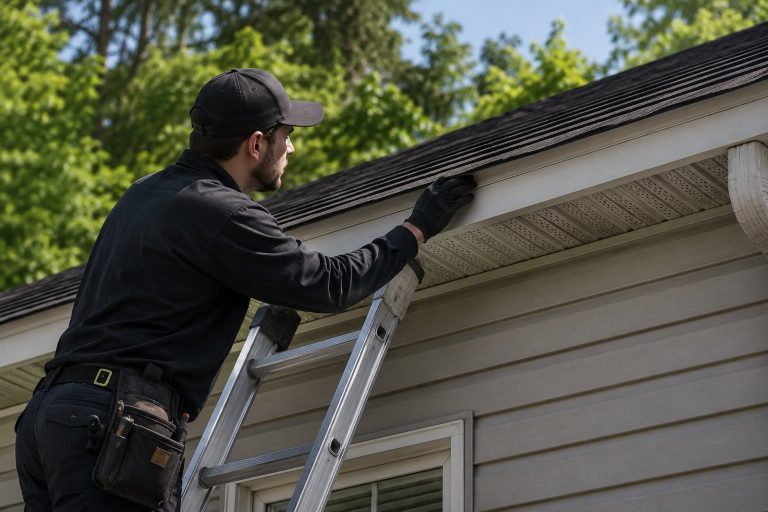
Professional squirrel removal usually begins with an inspection of the property. The technician looks for the active entry point, secondary openings, chew marks, droppings, nesting material, and other evidence. The roofline, soffits, fascia, vents, and accessible attic areas may all be examined. If babies could be present, that needs to be addressed before normal exclusion proceeds.
When conditions are appropriate, squirrel removal often uses a one-way exclusion system. The device allows squirrels to leave the structure but prevents them from getting back through the same opening.
Other vulnerable openings may also need to be secured so the squirrel cannot simply move a few feet away and create another entrance. After the animals have exited, the one-way device can be removed and the remaining opening permanently secured. This approach addresses both the animals and the reason they were able to enter.
Preventing Squirrels From Nesting in Your Home
Squirrel prevention starts with keeping the exterior of the home in good condition. Roof vents, soffits, fascia, shingles, and roof intersections should be inspected periodically for damage. Loose or deteriorated materials should be repaired before squirrels have an opportunity to exploit them.
Tree branches near the roof can provide convenient access, although squirrels are excellent climbers and jumpers, so trimming branches alone cannot guarantee that they will stay away. The most effective strategy is making the structure itself difficult to enter. If squirrels have already occupied the attic, repairs should be completed as part of a proper exclusion plan rather than simply sealing whichever hole is easiest to see.
When Should You Call for a Squirrel Inspection?
You do not need to wait until you actually see a squirrel inside your attic. Repeated scratching or running sounds, visible roof damage, squirrels disappearing into the roofline, or disturbed attic insulation are all reasons to investigate.
An inspection is particularly valuable during nesting season because it can help determine whether dependent young could be involved. Early action can also limit damage. A small chewed opening is generally easier to address than a badly damaged soffit or roof section that has been used for multiple nesting seasons.
Squirrel Removal in Hamilton
Squirrels are part of Ontario’s natural environment, but they do not belong inside your attic. If squirrels have found a way into your Hamilton home, simply removing the animals is not enough. The entry point needs to be identified, the timing of removal needs to account for nesting activity, and vulnerable areas should be secured to reduce the chance of another squirrel getting inside.
Because squirrels can have young during more than one part of the year, homeowners should be especially cautious about attempting to block an active opening without first determining what is inside.
Book an Inspection with Hamilton Wildlife
If you hear scratching in the attic, see squirrels entering your roof, or notice damage around your soffits or vents, Hamilton Wildlife can help.
Our wildlife technicians can inspect the property, locate squirrel entry points, check for signs of nesting activity, and recommend a humane exclusion plan based on the conditions at your home. We focus on getting squirrels out safely while addressing the openings that allowed them inside in the first place.
Schedule your squirrel inspection with Hamilton Wildlife for humane solutions to squirrel activity around your home.