
Seeing a skunk wandering through your yard at night may not seem like a major concern, but discovering that one has dug underneath your home’s foundation is a different story. Skunks frequently choose areas beneath porches, decks, sheds, and concrete foundations as den sites because these locations offer safety, warmth, and protection from predators.
Many Hamilton homeowners first realize they have a skunk problem after noticing freshly disturbed soil along the edge of their foundation or catching the unmistakable odor of a skunk around the property. While skunks are generally calm animals that prefer to avoid conflict, allowing one to remain under your home can lead to structural concerns, unpleasant smells, and recurring wildlife problems.
Understanding why skunks dig under foundations and how to prevent them from returning can help protect your property and avoid costly repairs.
Why Skunks Look for Shelter Under Foundations
Skunks are not digging under foundations because they want to damage your home. They are simply searching for a secure place to live. Unlike squirrels or raccoons that often occupy attics, skunks prefer ground-level shelters. A foundation creates an ideal den because it provides protection from rain, snow, wind, predators, and human activity.
These spaces also maintain a more stable temperature than the surrounding environment, making them comfortable throughout much of the year. Female skunks are especially attracted to sheltered areas beneath structures during the spring when preparing to give birth.
Why Foundations Make Ideal Dens
Concrete foundations often leave small gaps or voids where soil has settled over time. These spaces can be large enough for a skunk to begin digging. Once a small opening exists, a skunk can gradually enlarge it using its powerful front claws.
Unlike animals that chew or tear through building materials, skunks primarily move loose soil. They take advantage of existing weak spots rather than creating entirely new openings through concrete. Once the entrance has been established, the protected cavity beneath the foundation becomes an attractive place to rest during the day.
Skunks Prefer Soft Soil
The condition of the soil around your home plays a major role in whether skunks decide to dig. Loose soil, mulch, flower beds, and landscaped areas are much easier to excavate than compacted ground.
Homes with recently completed landscaping projects often provide ideal digging conditions because the soil has already been disturbed. Areas with poor drainage can also become softer after rainfall, making excavation easier for wildlife. If your property has multiple sections of loose soil around the foundation, it may be more attractive to skunks looking for a den site.
Spring Is the Busiest Time for Skunk Activity
Most skunk digging problems occur during the spring. Female skunks begin searching for safe den locations before giving birth, usually between late winter and early spring.
Once a suitable location is found, the mother remains with her babies for several weeks while they grow. Because young skunks cannot leave the den immediately, it is important not to seal the entrance without confirming whether babies are present. Professional wildlife removal helps ensure the entire family is removed safely.
Common Places Skunks Dig
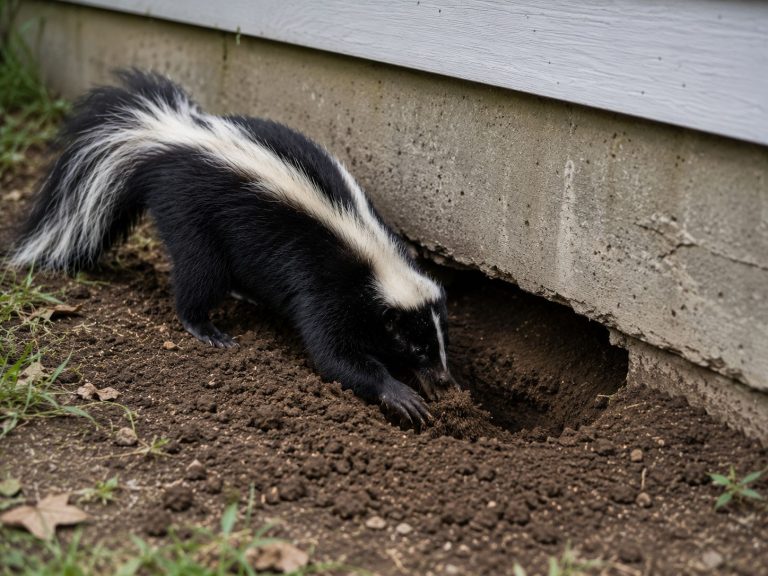
Although foundations are a common target, skunks also use several other structures around residential properties. Decks are among their favorite den sites because they offer easy access and good protection from weather. Garden sheds, porches, crawl spaces, and concrete steps are also frequently used.
In some cases, skunks simply enlarge an existing opening beneath one of these structures instead of creating an entirely new burrow. If one protected area becomes unavailable, they may simply relocate to another nearby structure on the same property.
Signs That a Skunk Is Living Under Your Foundation
Fresh digging is usually the first sign homeowners notice. You may find a shallow trench leading beneath the foundation, with loose soil piled near the entrance.
Unlike larger burrowing animals, skunk entrances are typically neat and just large enough for the animal to pass through comfortably. Tracks may also be visible in soft soil, especially after rain.
Another common sign is a strong skunk odor that seems to linger around one area of the yard. Some homeowners also hear light scratching noises beneath porches or foundations during the evening as the skunk leaves the den to search for food.
Why Skunks Return to the Same Property
Skunks are creatures of habit. If a property has previously provided safe shelter, another skunk may attempt to use the same location in the future. Simply removing the skunk without addressing the access point often results in another animal moving into the same den.
This is why exclusion work is just as important as the removal itself. Professionally securing the area helps prevent future wildlife from taking advantage of the same opening.
Can Skunks Damage Your Foundation?
Skunks rarely damage concrete itself, but the digging around the foundation can create other issues.As soil is displaced, voids may develop beneath walkways, patios, or small concrete slabs.
If the den becomes larger over time, surrounding landscaping may begin to settle or erode. In addition, repeated digging around the foundation can expose vulnerable areas that allow water to collect near the home. While the structural impact is usually gradual, ignoring the problem allows the den to become larger and more difficult to repair.
Other Problems Caused by Skunks
One obvious concern is the possibility of being sprayed. Skunks are not naturally aggressive and almost always spray only when they feel threatened. However, surprising a skunk while gardening, walking a dog, or accessing the crawl space can result in an unpleasant encounter.
Skunks may also attract attention from neighborhood dogs, leading to stressful situations for both pets and homeowners. If babies are present beneath the structure, the mother is likely to remain nearby for several weeks until the young are old enough to leave the den.
Why DIY Removal Can Create Bigger Problems
Many homeowners attempt to solve the problem by filling the hole with soil or placing heavy objects over the entrance. Unfortunately, this often traps the skunk beneath the structure or encourages it to dig a new exit somewhere else.
If young skunks are present, sealing the entrance can separate the mother from her babies. The mother may attempt to dig through another section of the foundation or remain nearby trying to regain access. Professional wildlife technicians inspect the den first, determine whether babies are present, and use humane removal methods designed to avoid these complications.
How Professional Skunk Removal Works
Humane skunk removal begins with identifying the active den entrance and confirming whether the structure is currently occupied. If no babies are present, a one-way exclusion door is typically installed. This allows the skunk to leave naturally while preventing it from re-entering. Once the technician confirms the den is empty, the opening is professionally secured.
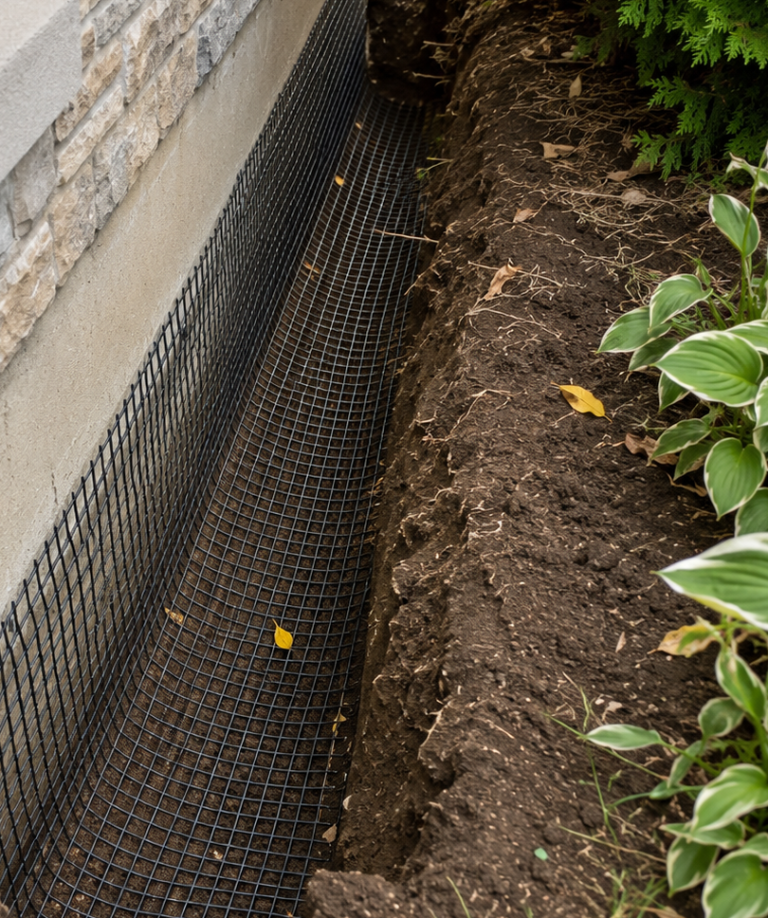
For foundations, decks, and sheds, this often involves installing heavy galvanized steel mesh beneath ground level around the perimeter of the structure. The mesh is buried vertically and then bent outward underground to create an L-shaped barrier that prevents skunks from digging underneath again. This long-term solution protects the property while allowing wildlife to continue living naturally elsewhere.
Preventing Future Skunk Problems
The best way to prevent skunks from digging under your foundation is to eliminate easy access before wildlife discovers it. Inspect your foundation, deck, shed, and porch regularly for small gaps or signs of digging.
Keep vegetation trimmed back to improve visibility around the home, and repair areas where soil has settled away from the foundation.
If you notice fresh digging, it is always easier to address the problem before a skunk becomes fully established beneath the structure. Regular inspections can save homeowners significant repair costs in the future.
Book Humane Skunk Removal with Hamilton Wildlife
If you’ve noticed fresh digging around your foundation, porch, deck, or shed, don’t wait for the problem to get worse.
Hamilton Wildlife provides humane skunk removal and exclusion services throughout Hamilton. Our experienced technicians safely remove skunks, inspect for babies, and install long-lasting underground barriers that help prevent future digging beneath your home.
Contact Hamilton Wildlife today to schedule a professional inspection and protect your property from skunks before minor digging turns into a larger wildlife problem.